Finland’s 6G research moves to its next phase with the CINET flagship
The Research Council of Finland has chosen Connected Intelligence and Networks for a Resilient Society (CINET) as a new Finnish science flagship for 2027 to 2034. The University of Oulu leads the programme with Aalto University, the University of Helsinki, and VTT Technical Research Centre of Finland as research partners. CINET will work closely with numerous collaborators, including dozens of companies, public authorities and government offices, and several universities and other research organisations, among them other existing science flagships.
CINET builds on the work of the 6G Flagship and takes Finnish 6G research to its next phase. Its researchers will examine how communication, sensing, and AI-based computing can remain dependable so that critical services keep running through failures, overloads, and cyberattacks.
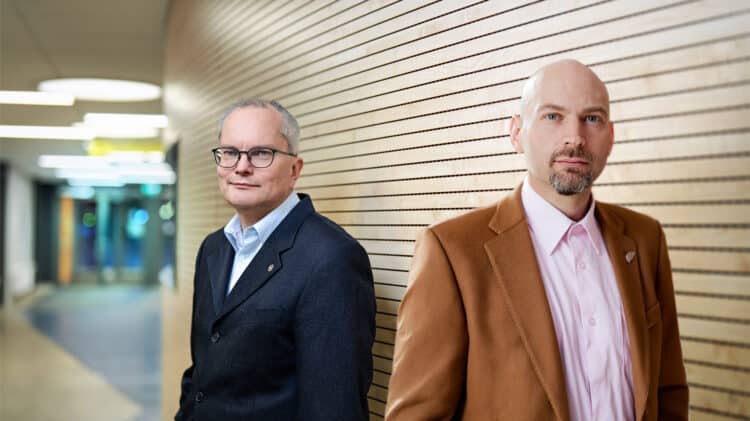
Professor Markku Juntti of the University of Oulu will lead CINET, with Professor Riku Jäntti of Aalto University as vice director. More than 50 principal investigators will lead their research teams, and over 170 other doctoral-level researchers will contribute to the common vision.
“Information and communications technology is converging into a connected intelligence fabric of networks, computing, and embedded intelligence. How should it be designed so that its capabilities keep growing, it operates dependably and resiliently, and its power consumption stays sustainable? Nobody knows yet. CINET will tackle these questions with a multidisciplinary pool of experts and a broad base of collaborators,” says Juntti.
“CINET strengthens Aalto’s key research area of digitalisation and AI by bringing together our expertise in AI, computer engineering, microelectronics, communications and sensing. By combining the four partners’ complementary strengths, we aim to build a resilient, energy-efficient computing–communications continuum with integrated sensing, developing platforms and algorithms that bring intelligence to the edge. Our ambition is to enable even battery-free devices to sense, compute and communicate reliably, extending intelligent systems to places where replacing batteries is impractical,” says Jäntti.
Research focuses on networks people can rely on
Connected intelligence describes networks that do more than carry data. They also sense their surroundings and run AI computations, so devices and services can act on shared data and an understanding of the world around them.
CINET organises its research in three strands, with a fourth dedicated to impact actions. The researchers will first lay the scientific foundations for connected intelligence that society can depend on. They will then test their results at scale in the Future Wireless Research Infrastructure (FUWIRI), a national network of wireless research infrastructures that includes test networks operating on the partner campuses since 2015. The University of Oulu coordinates FUWIRI with Tampere University, Aalto University and VTT. The Research Council of Finland has selected it as one of Finland’s Lighthouse research infrastructures for 2025–2028.
Other lines of work cover new business models, non-terrestrial networks such as satellite links, quantum-enhanced networks and environmental awareness. The work extends beyond telecoms to sectors that depend on networks, including energy, transport, health and defence. The CINET flagship also aims to inform policy, regulation and international standardisation.
We need real-life platforms to show how these technologies actually perform in operation.
Work starts from eight years of 6G research
The University of Oulu launched the 6G Flagship in 2018 as the world’s first 6G research programme. That spring, it became one of the first two flagships the Research Council of Finland selected for its new Flagship Programme. By June 2026, it had produced 4,875 peer-reviewed publications and 188 doctoral degrees, and run 597 externally funded research projects. CINET draws on the researchers and test facilities that have grown around it.
“CINET will develop the next generation of 6G technology, which will be AI-native and resilient. That makes the partners’ FUWIRI experimental platforms especially important. Traditional performance analysis can no longer capture how such complex systems behave, so we need real-life platforms to show how these technologies actually perform in operation,” says Professor Ari Pouttu, Director of the 6G Flagship, who leads CINET’s critical services research.
CINET is one of two new flagships for the University of Oulu, alongside H2ERA, a new flagship on the hydrogen economy.
“Two new flagships show the strength of research at the University of Oulu, but they also bring us a great responsibility. A flagship is a mandate to lead its field in Finland and to set the direction internationally. With the 6G Flagship, we turned a strong national position into international impact. Now we can do the same with our new flagships,” says Vice Rector for Research Matti Latva-aho, who chairs the CINET steering group.
The CINET Flagship funding runs until 2034
The Research Council of Finland funds University of Oulu’s part of CINET with 5.2M€ for 2027–2034. The CINET flagship begins its work in January 2027.