6G-FISRE: Finland and Sweden launch joint 6G resilience programme
Finland and Sweden have launched a joint 6G resilience programme: “6G-FISRE – Towards Resilient 6G Networks – A Swedish-Finnish Joint Undertaking,” led by the University of Oulu and the KTH Royal Institute of Technology, to advance Europe’s technological sovereignty and societal security. With a total budget of nearly €4.3 million, the programme unites leading academic, industrial, and public-sector partners to develop next-generation communication systems that operate reliably under increasingly complex and uncertain conditions.
Resilient digital infrastructure has become a strategic necessity. Modern societies depend heavily on connectivity, yet communication networks remain vulnerable to cyberattacks, infrastructure failures, and crises. The programme responds by advancing “resilient-by-design” 6G technologies that maintain continuity of critical services under adverse conditions, rather than treating resilience as an add-on after the fact. The same resilience that keeps civilian critical services running under stress is inherently dual-use, strengthening continuity in security- and defence-related operations across the Nordic region.
The collaboration builds on deep Nordic expertise and a long history of cooperation among the region’s wireless communications leaders, and reflects a shared ambition to shape future global standards. Alongside the University of Oulu and KTH, the consortium includes Aalto University, Chalmers University of Technology, Luleå University of Technology, VTT Technical Research Centre of Finland, Nokia, Ericsson, Bittium, Combient and Saab. The programme places particular emphasis on dual-use capabilities, designing 6G systems that serve civilian needs and security-related applications alike while influencing international technology development.
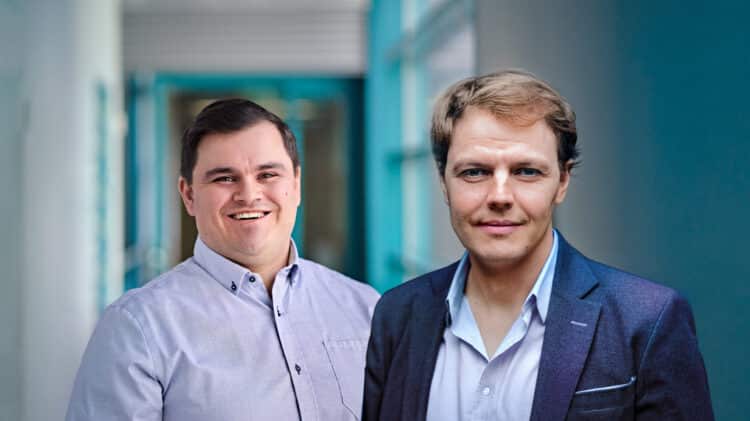
“Mobile networks have always been built for speed and efficiency, not for surviving a crisis. This programme designs resilience in 6G from the ground up, ensuring critical services remain connected even during cyberattacks and disasters. Finland and Sweden have long been wireless pioneers, innovating in parallel. By joining our research, industry, and testbeds into a single programme, we turn two strong national efforts into a single Nordic force capable of shaping the global 6G standard,” says Professor Hirley Alves from the University of Oulu, Finland.
“Resilience can’t be bolted onto a network after it is built. It has to be engineered in and, increasingly, made autonomous, with AI that enables networks to sense risk, adapt, and heal themselves in real time. What makes this collaboration different is that it finally brings together Sweden’s and Finland’s wireless strengths: two GSM pioneers moving from parallel efforts to a joint undertaking, with the scale and the shared voice to influence how resilient the world’s future networks will be,” adds Professor James Gross from the KTH Royal Institute of Technology, Sweden.
The Finnish-Swedish partnership lays the foundation for broader Nordic and European engagement and positions its members at the forefront of resilient communication systems for the digital future. The partners regard the effort as timely and nationally significant, with strong long-term potential to shape Europe’s 6G landscape.
Finland and Sweden seek to make future communication networks more capable, robust, secure, and trusted through this programme—an essential foundation for stable societies in an increasingly uncertain world.
Contact
University of Oulu
Hirley Alves
hirley.alves@oulu.fi
KTH Royal Institute of Technology
James Gross
jamesgr@kth.se