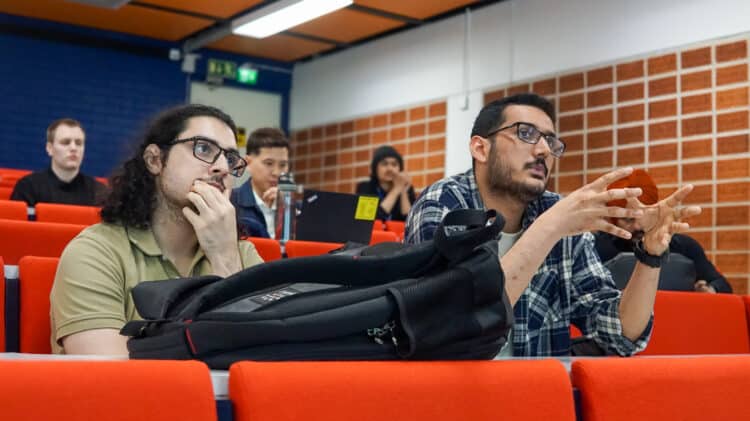
6GESS seminar explored intelligent sensing for future healthcare
The 6GESS seminar brought international guest researchers to the University of Oulu on Thursday 11 June to discuss how intelligent sensing, artificial intelligence, and emerging network technologies could support future healthcare.
Opened by Teemu Myllylä, the seminar followed a practical question: how can research prototypes collect useful physiological data, interpret it responsibly, and support care without replacing clinical judgement? The talks approached that question from different points in the same chain, from biomedical signals and medical images to wearable devices, microwave sensors, lab-on-a-chip systems, and extended reality.
“Future healthcare systems will depend on the whole sensing chain, not a single device or algorithm. We need to understand how signals are measured, how they are processed close to the body, how sensitive data is protected, and how the results can be validated for real care settings.”
– Mariella Särestöniemi, University of Oulu.
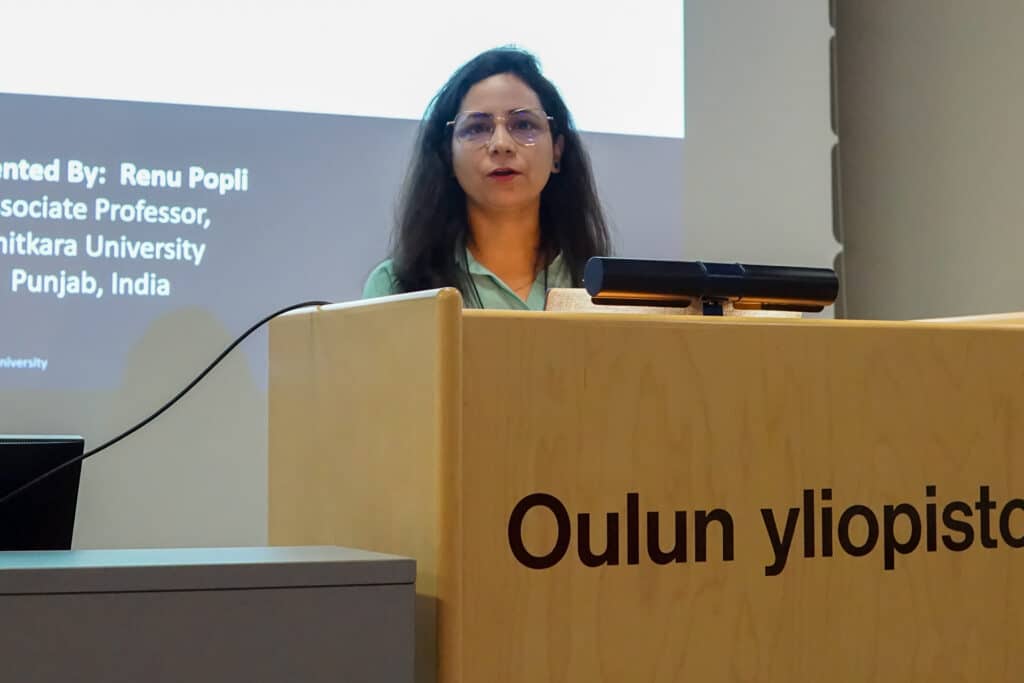
Renu Popli, Associate Professor at Chitkara University in Punjab, set out the wider healthcare frame through AI models for sepsis prediction, breast cancer image analysis, and privacy-preserving federated learning. Her examples moved from ICU time-series data, where missing values and changing patient signals complicate early sepsis detection, to histopathology images from the BreakHis breast cancer dataset. She also outlined smart medical kiosks that could combine EEG, ECG, heart rate, blood pressure, SpO₂, body temperature, facial cues, eye movement, fatigue detection, and patient-reported symptoms. The central question was how to fuse these signals without weakening reliability, explainability, or patient privacy.
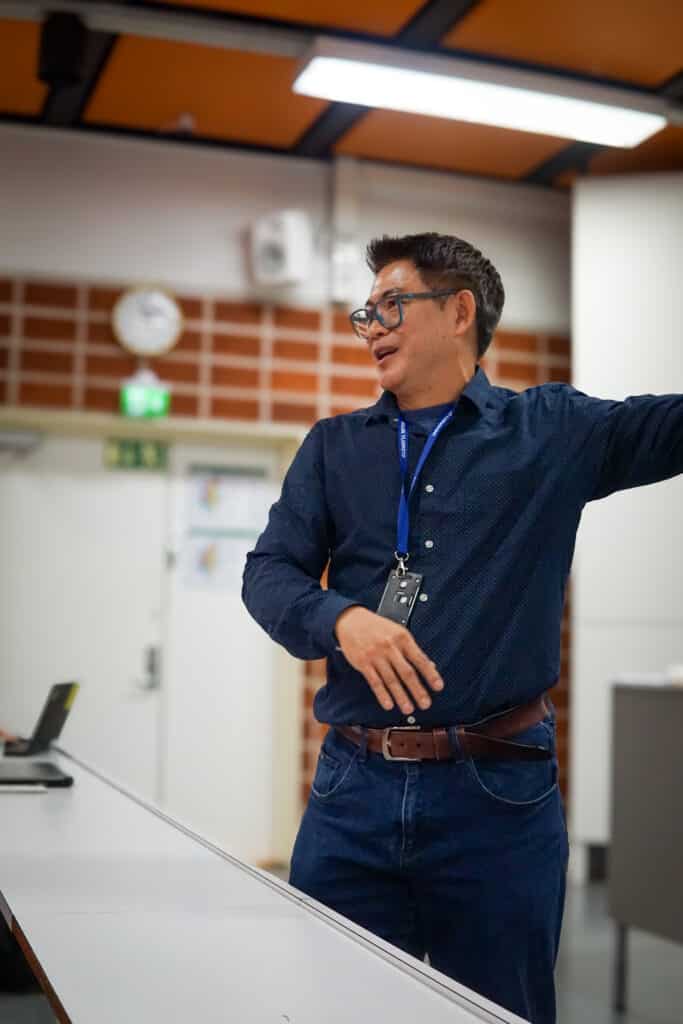
Attaphongse Taparugssanagorn, Professor at the Asian Institute of Technology, brought that data question closer to the body. His SmartWear AI work examined wearable systems for monitoring stress, activity, fatigue, and brain-related signals under real-world constraints. The approach combines signal processing, Tiny Machine Learning, and privacy-aware communication, allowing some decisions to happen locally on wearable devices. Avoiding a first trip to the cloud matters in health monitoring, where response time, battery life, data protection, and poor connectivity all influence whether a system can work outside the laboratory.
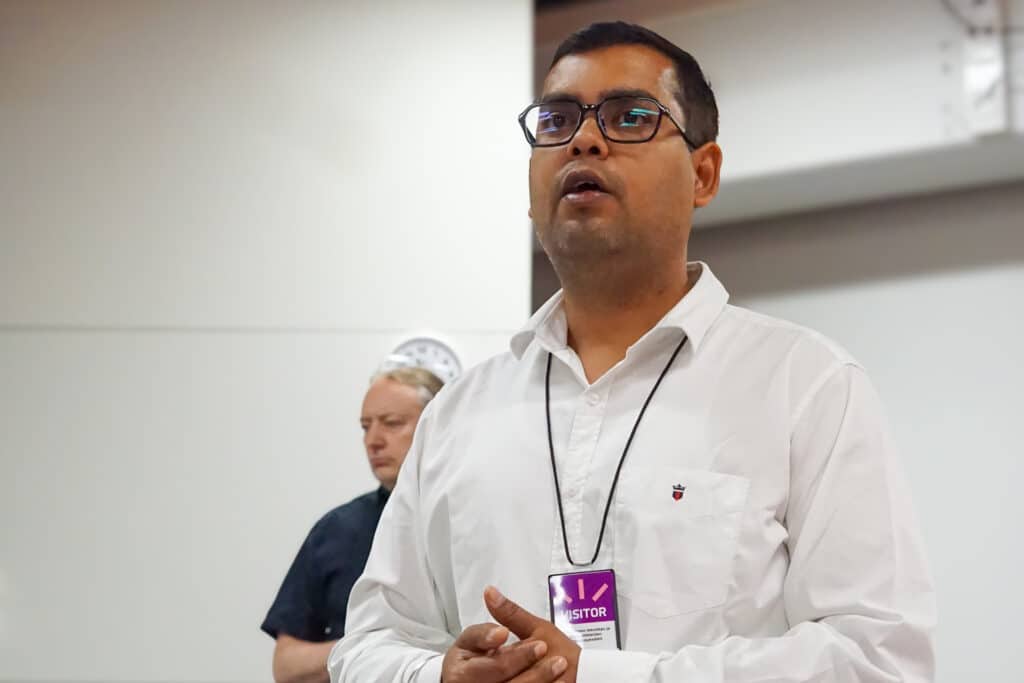
Rajeev Kumar, Associate Professor at Chitkara University, approached feasibility from the hardware side, focusing on microwave sensors and antennas for dielectric characterisation, biomedical sensing, and wearable systems. He presented research carried out with Professor Myllylä’s group at the University of Oulu on non-invasive microwave antenna systems for brain tumour detection. The work uses frequency-selective surface-backed antenna structures and phantom measurements to study how changes in measured reflection coefficients may indicate differences between healthy and tumour conditions. Kumar also discussed ongoing work on microwave antennas for hyperthermia-based cancer treatment and compact antennas for wearable applications, showing how sensor hardware remains central to future health platforms.
Gurjinder Singh, Associate Professor at Chitkara University, examined how virtual and extended reality could support healthcare, mental wellbeing, and STEM education. His examples included VR-based clinical research with electroencephalography monitoring during immersive therapy sessions, as well as ZenSphere, a neuroadaptive XR platform that uses EEG signals, virtual environments, and AI models to adapt digital experiences to the user’s changing state. He also presented Dhwani-VR, a hearing-loss screening concept that combines virtual reality with spatial audio. In each case, XR was tied to sensing, whether through EEG monitoring during therapy, adaptive feedback in ZenSphere, or spatial audio in Dhwani-VR.
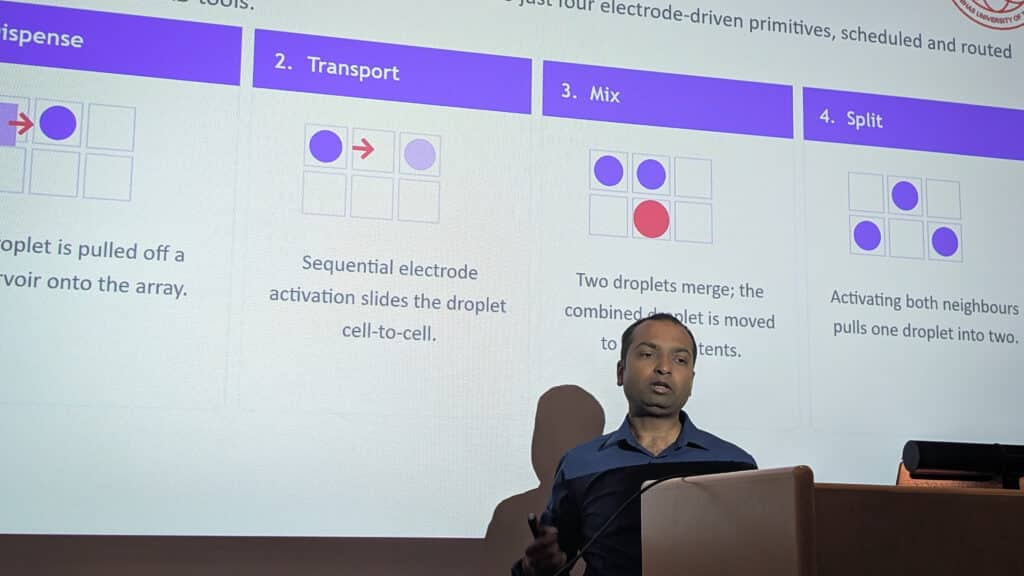
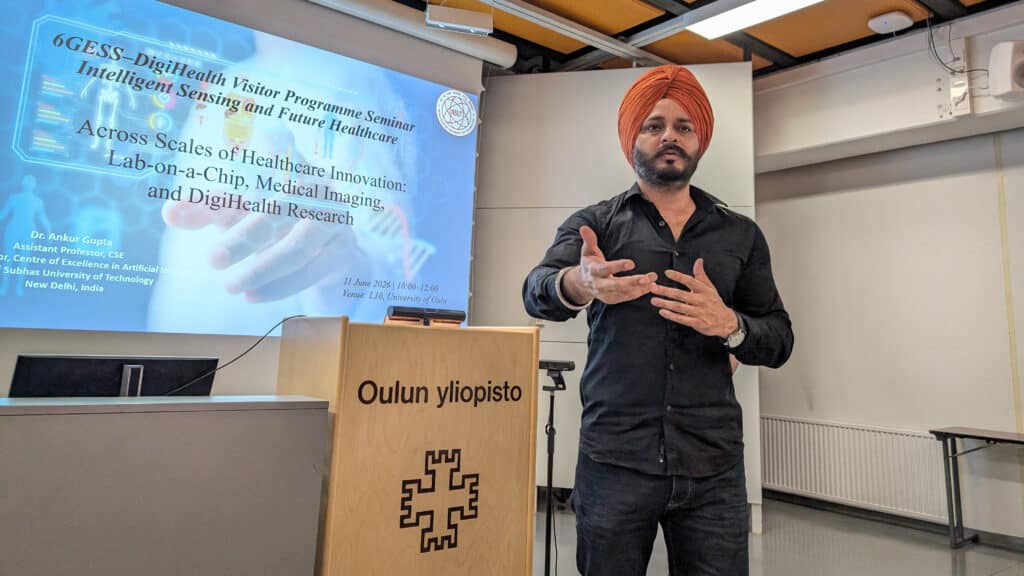
Ankur Gupta, Assistant Professor in Computer Science and Engineering and Deputy Coordinator of the Centre of Excellence in AI at NSUT, New Delhi, traced healthcare innovation across three scales. He described the NextGenAI Lab’s work in the BraTS brain-tumour challenges, including treatment-response classification from pre- and post-therapy MRI, segmentation across under-represented populations, and glioblastoma histopathology subregion classification. He then turned to programmable lab-on-chip systems, where software helps schedule how tiny volumes of fluid are diluted, mixed, routed, and washed. The final section looked at microwave imaging for tumour detection, where a hybrid physics-AI approach combines electromagnetic reconstruction, machine-learning-based denoising, and generative AI to work with sparse, noisy phantom measurements.
Taken together, the talks showed how digital health research now cuts across devices, data, and networks. Sensors produce difficult data. Signal processing cleans it. AI models classify, predict, or flag anomalies. Networks determine what must move, what can stay local, and how securely information travels. Clinical validation then decides whether any of this has practical value.
For 6GESS, that framing is central. Faster networks and richer sensing do not create better healthcare by themselves. Their value depends on robust measurements, low-power devices, secure links, responsible AI, and evidence that systems work for new users, new settings, and real clinical needs. By bringing researchers from India and Thailand into dialogue with University of Oulu teams, the seminar treated future healthcare as a shared problem across engineering, data science, and medicine.
The seminar showed a field moving from separate prototypes towards connected systems: lab-scale sensors, imaging tools, wearable monitors, health kiosks, and immersive environments. The next test is less about adding more data and more about proving which signals matter, which decisions can safely happen near the body, and which systems can earn a place in everyday care.