
- This event has passed.
IEEE Antennas and Propagation Society Distinguished Lectures Oulu
The Centre for Wireless Communications at the University of Oulu is pleased to host the IEEE Antennas and Propagation Society (AP-S) Distinguished Lectures in Oulu on Monday, 28 September 2026, at Tellus Backstage, Linnanmaa Campus.
Hosted by Prof. Jack Soh and Adj. Prof. Pekka Kyösti, the event is organized in collaboration with the IEEE Finland AP/ED/MTT Chapter, 6G Flagship, and IEEE Student Branch Oulu, with sponsorship from PLM Group.
The event brings the IEEE AP-S Distinguished Lecture program to Oulu, offering an opportunity to hear from leading experts in antennas and propagation and to connect with researchers, students, and professionals in the field.
Livestream
Watch Online: 28 September at 09:00
Subscribe to the 6G Flagship channel to participate in the live Q&A.
Agenda
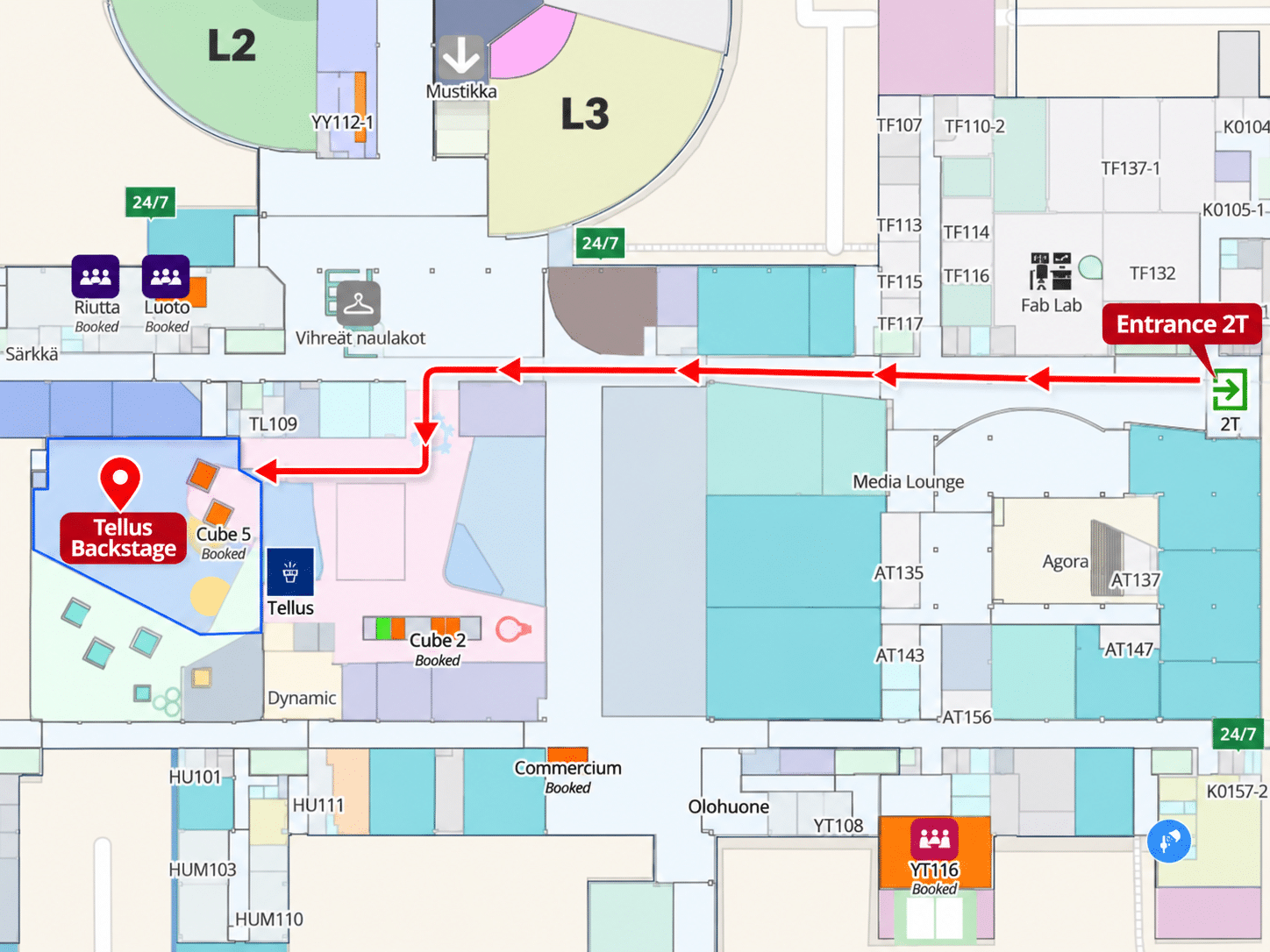
Finding Tellus Backstage
From Entrance 2T, follow the corridor west past the Media Lounge and Cube 2, then turn left into Tellus Backstage.
| Time | Program/Activities |
| 08:45-09:15 | Coffee and networking |
| 09:15-09:20 | Opening Address: Prof. Ping Jack Soh, University of Oulu, Finland |
| 09:20-10:20 | Distinguished Lecture 1: Metamaterials and Composites: Electromagnetic Description and Unexpected Effects Prof. Ari Sihvola, Aalto University, Finland |
| 10:20-11:20 | Distinguished Lecture 2: Magic World of Transformation Electromagnetics: Invisibility and Beyond, by Prof. Ozlem Ozgun, Hacettepe University, Turkiye |
| 11:20-12:10 | Lunch served at Backstage + Networking |
| 12:10-12:30 | Electromagnetic Design Beyond Parameter Sweeps, by Vesna Somero, PLM Group |
| 12:30-13:30 | Distinguished Lecture 3: How Many Spatial Degrees of Freedom Are There? From Antennas and Near-Field Communications to Imaging and Computation Prof. Mats Gustafsson, Lund University, Sweden |
| 13:30-14:30 | Distinguished Lecture 4: Non-Hermitian Electromagnetics and Its Applications Prof. Pai-Yen Chen, University of Illinois Chicago, USA |
| 14:30-15:30 | Distinguished Lecture 5: Electromagnetic Wave Propagation: Modeling and Simulation Levent Sevgi, Istanbul Technical University, Turkiye |
| 15:30-15:35 | Closing Words Research Director Pekka Kyösti, University of Oulu, Finland |
Lectures
Metamaterials and Composites: Electromagnetic Description and Unexpected Effects
In the analysis of electromagnetic fields interacting with material structures, the response of the medium is condensed in dielectric and magnetic material parameters, like permittivity, conductivity, and permeability. In complicated and anisotropic media, these material parameters may need to be generalized from scalar quantities into matrices, or equivalently dyadics. The emergent complexity in the response of materials is very often of structural origin, in other words the manner in which a heterogeneous mixture is formed determines its macroscopic electromagnetic material parameters. This lecture deals with the variety of ways how one is able to characterize the macroscopic dielectric and magnetic behavior of composite materials with given properties of the constituents and the geometrical microstructure. The rich history of homogenization of mixtures will be reviewed, including Clausius−Mossotti, Lorenz−Lorentz, Maxwell Garnett, Bruggeman, and other homogenization principles, and their ranges of applicability will be assessed. Mixing principles will be applied to media with interesting properties that differ strongly from those of the constituent materials, like, for example, aqueous, strong‐contrast, lossy, plasmonic, chiral, and bianisotropic mixtures. This leads to the domain of metamaterials, and the lecture will shed light into this recent paradigm in electromagnetics.

Prof. Ari Sihvola, Aalto University, Finland
Ari Sihvola received the degree of Doctor of Technology in 1987 from the Helsinki University of Technology (TKK), Finland (presently Aalto University). Besides working for TKK, Aalto, and the Academy of Finland, he was visiting engineer in the Research Laboratory of Electronics of the Massachusetts Institute of Technology, Cambridge, in 1985–1986. In 1990–1991, he worked as a visiting scientist at the Pennsylvania State University, State College. In 1996, he was visiting scientist at the Lund University, Sweden. He was visiting professor at the Electromagnetics and Acoustics Laboratory of the Swiss Federal Institute of Technology, Lausanne (academic year 2000–01), in the University of Paris 11, in Orsay (June 2008), and in the University of Rome La Sapienza (May–June 2015). His research interests include waves and fields in electromagnetics, modeling of complex media and metamaterials, remote sensing, education in physics and engineering, and history of electrical engineering. He is presently professor emeritus in the School of Electrical Engineering at the Aalto University. Ari Sihvola is President of the International Union of Radio Science (URSI), Life Fellow of IEEE, and former Distinguished Lecturer of the AP Society.
Magic World of Transformation Electromagnetics: Invisibility and Beyond
Transformation Electromagnetics (TEM), also known as Transformation Optics, has attracted significant attention because it enables the systematic design of a broad class of electromagnetic and optical devices, including invisibility cloaks, reshapers, concentrators, rotators, radar cross section (RCS) reduction schemes, flat lenses, and compact antennas and microwave components. Often described as a coordinate transformation technique, TEM provides an intuitive, application-driven framework for synthesizing transformation media. It offers flexible control of electromagnetic waves by exploiting the form-invariance of Maxwell’s equations under coordinate transformations. In essence, Maxwell’s equations preserve their structure in a mapped coordinate system, while the corresponding medium is transformed into an anisotropic and, in general, inhomogeneous material that reproduces the field behavior of the modified geometry.
Building on the invisibility-cloak concept introduced in 2006, we introduced the reshaping approach in 2007, which subsequently motivated us to explore TEM not only as a powerful device-design methodology, but also as a means to circumvent computational difficulties arising in the numerical solution of complex electromagnetic problems. In this context, we coined the term software metamaterials to describe transformation media engineered to facilitate computation. We have employed this idea in the numerical treatment of challenging scenarios such as multiscale electromagnetic analysis, rough-surface scattering, microwave imaging and EM-driven optimization.
In this talk, we first review the fundamentals of TEM to clarify the underlying physics and design principles. We then present a set of representative and surprising applications that highlight the versatility of transformation-based approaches in both electromagnetics and computation.
Prof. Özlem ÖZGÜN, Hacettepe University, Ankara, Turkiye
Özlem Özgün is currently a full professor in the Department of Electrical and Electronics Engineering and vice dean of the Faculty of Engineering at Hacettepe University, Ankara, Turkey. She received her B.Sc. and M.Sc. degrees from Bilkent University and her Ph.D. from Middle East Technical University (METU), all in Electrical and Electronics Engineering. She was a postdoctoral researcher at Penn State University, US.
Her research interests include various topics in computational electromagnetics and radiowave propagation, including electromagnetic radiation and scattering, numerical methods, domain decomposition methods, transformation electromagnetics, stochastic electromagnetic problems and optimization techniques. She has authored over 130 refereed publications in international journals, book (MATLAB-based Finite Element Programming in Electromagnetic Modeling, CRC Press, 2018), book chapters and conference proceedings.
Dr. Özgün is a senior member of IEEE and URSI and a past chair of the URSI Turkey steering committee. Her awards include the METU Best Ph.D. Thesis Award (2007), the Felsen Fund Excellence in Electromagnetics Award (2009), and Hacettepe University Science Award (2024). She was recognized among the world’s top 2% most influential scientists (Stanford University & Elsevier, 2023–2025).
How Many Spatial Degrees of Freedom Are There? From Antennas and Near-Field Communications to Imaging and Computation
The number of spatial degrees of freedom (NDoF) provides a fundamental measure of how much independent information can be transmitted, received, or represented by an electromagnetic system. It therefore connects problems that are often treated separately, including wireless communication, antenna arrays, near-field beamforming, imaging, and computational electromagnetics. This presentation reviews fundamental results on spatial degrees of freedom and introduces an analytical approach for estimating the NDoF between arbitrarily shaped transmitting and receiving regions. The resulting expressions have a simple geometrical interpretation in terms of shadow areas measured in wavelengths and unify and extend established results based on, for example, Weyl’s law and the paraxial approximation.
The analytical predictions are compared with numerical evaluations of the singular-value spectrum of the electromagnetic propagation operator, both in free space and in environments containing structures such as ground planes and corners. The connection between spatial DoF, sampling, and near-field beamforming is then explored, illustrating how the available electromagnetic degrees of freedom determine the number of independent spatial channels and the sampling required to represent them. Finally, connections to characteristic mode theory, electromagnetic imaging, and low-rank compression of Method of Moments matrices are discussed. These examples illustrate how spatial degrees of freedom provide a common framework for understanding fundamental limits and computational complexity across a broad range of electromagnetic problems.

Prof. Mats Gustafsson, Lund University, Sweden
Mats Gustafsson received the M.Sc. degree in Engineering Physics in 1994 and the Ph.D. degree in Electromagnetic Theory in 2000 from Lund University, Sweden. He was appointed Docent in 2005 and Professor of Electromagnetic Theory at Lund University in 2011. In 2004, he co-founded Phase Holographic Imaging AB. His research interests include electromagnetic scattering, antenna theory, inverse scattering, imaging, and fundamental limitations of electromagnetic systems. He has authored or co-authored more than 100 peer-reviewed journal papers and more than 100 conference papers. Prof. Gustafsson received the IEEE Schelkunoff Transactions Prize Paper Award in 2010, the IEEE Uslenghi Letters Prize Paper Award in 2019, and the IEEE Altschuler Prize Paper Award in 2025, as well as Best Paper Awards at EuCAP in 2007 and 2013. He served as an IEEE Antennas and Propagation Society Distinguished Lecturer from 2013 to 2015.
Non-Hermitian Electromagnetics and Its Applications
Over the past decade, non-Hermitian physics and its unique singularities—exceptional points (EPs)— have redefined wave engineering, facilitating breakthroughs in signal generation, routing, and sensing. My talk starts with reviewing non-Hermitian physics and parity-time (PT) symmetry, demonstrating how the formal similarity between Schrödinger’s and Maxwell’s equations enable electromagnetic systems with unconventional functionalities like unidirectional propagation and chiral dynamics. I will showcase our recent advancements in the RF and microwave domains, such as EP-based wireless sensors with unprecedented sensitivity, new classes of wideband and lossless non-Hermitian metamaterials exhibiting extreme effective material properties, super-directive antennas, misalignment-tolerant wireless power transfer, and entropy-boosted electromagnetic fingerprints for hardware security. I will also introduce the self-dual absorber-emitter singularity in PT systems and their potential in tailoring laser thresholds and developing ultrasensitive Interferometric sensors.

Prof. Pai-Yen Chen, University of Illinois Chicago (UIC), USA
Prof. Pai-Yen Chen is a Professor and University Scholar in the Department of Electrical and Computer Engineering at the University of Illinois Chicago (UIC). He received the Ph.D. degree from the University of Texas at Austin in 2013, and M.S. and B.S. degrees from National Chiao Tung University in 2006 and 2004, respectively. He was a Research Scientist at Intellectual Ventures Laboratory (2013-2014) and an Assistant Researcher in the Taiwan Semiconductor Research Institute (2006-2009).
He has been involved in multidisciplinary research on electromagnetics, RF/microwave antennas and circuits, wireless sensors and systems, metamaterials, nanophotonics, and nanoelectronics. He has received several prestigious awards, including IEEE Sensors Council Technical Achievement Award (advanced career), IEEE Sensors Council Young Professional Award, IEEE AP-S Raj Mittra Travel Grant, SPIE Rising Researcher Award, NSF CAREER Award, IOP Emerging Leader in Measurement Science and Technology, ACES Early Career Award, Young Scientist Awards from Electromagnetics Academy and International Union of Radio Science (URSI), UIC Researcher of the Year Rising Star, and Donald Harrington Fellowship. He currently serves as Senior Editor for IEEE Journal of Selected Areas in Sensors, Topical Editor for IEEE Sensors Journal, Track Editor for IEEE Transactions on Antennas and Propagation, and Associate Editor for Optics Express and Advanced Photonics Nexus. He was a former Associate Editor of IEEE Antennas and Wireless Propagation Letters, IEEE Journal of Radio Frequency Identification, and IEEE Journal of Electromagnetics, RF and Microwaves in Medicine and Biology. He currently serves as the Distinguished Lecturer for IEEE Sensors Council (2024-2026) and IEEE Antennas and Propagation Society (2026-2028). He is a Fellow of IEEE and Optica/OSA.
Electromagnetic Wave Propagation: Modeling and Simulation
This IEEE AP-S DL talk will focus on electromagnetic wave propagation which has long been one of the important options for medium and long-range communication as well as radar systems. In addition to the classical LF/MF/HF broadcast and communication systems, emerging HF and VHF radar technologies, intelligent transportation or digital radio broadcast systems require understanding propagation characteristics over the Earth’s surface along realistic propagation paths. It is therefore propagation engineers’ or site surveyors’ dream to have a numerical propagation tool that calculates path losses between any two points marked on their digital maps. This necessitates the solution of electromagnetic (EM) wave equation in three-dimension (3D) which takes into account various EM effects, such as, the irregular terrain profile, the vegetation, the Earth’s curvature, the atmospheric refractivity, the presence of buildings, cars, and other obstacles, etc. Also, it must include all the relevant scattering components (e.g., multiple reflections and refractions, edge/tip diffractions, surface and/or leaky waves, etc.) that account for the path loss. Unfortunately, this is not yet in sight. The aim of this presentation is to review electromagnetic wave propagation models and numerical propagation prediction tools and discuss problems, challenges, and project future developments.
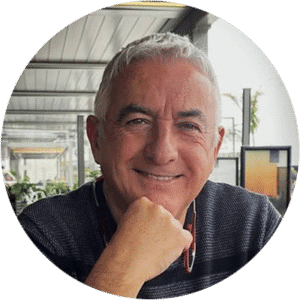
Prof. Levent Sevgi, ITU – Istanbul Technical University, Istanbul, Turkiye
Prof. Dr. Levent Sevgi is a Fellow of the IEEE (since 2009) and the recipient of IEEE APS Chen-To Tai Distinguished Educator Award (2021). He was with Istanbul Technical University (1991–1998), TUBITAK-MRC, Information Technologies Research Institute (1999–2000), Weber Research Institute / NY Polytechnic University (1988–1990), Scientific Research Group of Raytheon Systems Canada (1998–1999), Center for Defense Studies, ITUV-SAM (1993–1998 and 2000–2002) and with University of Massachusetts, Lowell (UML) MA/USA as a full-time faculty (2012–2013), DOGUS University (2001-2014), Istanbul OKAN (2014 – 2021), and ATLAS (2022-2024) Universities.
He served four years (2020-2023) as an IEEE AP-S Distinguished Lecturer. Since Jan 2024 he has been the chair of the IEEE AP-S DL Committee. He served one-term in the IEEE AP-S AdCom (2013-2015) and one-term and as a member of IEEE AP-S Field Award Committee (2018-2019). He had been the writer/editor of the “Testing ourselves” Column in the IEEE AP Magazine (2007-2021), a member of the IEEE AP-S Education Committee (2006-2021), He also served in several editorial boards (EB) of other prestigious journals / magazines, such as the IEEE AP Magazine (2007-2021), Wiley’s International Journal of RFMiCAE (2002-2018), and the IEEE Access (2017-2019 and 2020 – 2022). He is the founding chair of the EMC TURKIYE International Conferences (www.emcturkiye.org).
He has been involved with complex electromagnetic problems for nearly four decades. His research study has focused on electromagnetic radiation, propagation, scattering and diffraction; RCS prediction and reduction; EMC/EMI modelling, simulation, tests and measurements; multi-sensor integrated wide area surveillance systems; surface wave HF radars; analytical and numerical methods in electromagnetics; FDTD, TLM, FEM, SSPE, and MoM techniques and their applications; bio-electromagnetics. He is also interested in novel approaches in engineering education, teaching electromagnetics via virtual tools. He also teaches popular science lectures such as Science, Technology and Society.
He has published many books / book chapters in English and Turkish, over 180 journal/magazine papers / tutorials and attended more than 100 international conferences / symposiums. His three books Complex Electromagnetic Problems and Numerical Simulation Approaches, Electromagnetic Modeling and Simulation and Radiowave Propagation and Parabolic Equation Modeling were published by the IEEE Press – WILEY in 2003, 2014, and 2017, respectively. His fourth and fifth books, A Practical Guide to EMC Engineering (Sep 2017) and Diffraction Modeling and Simulation with MATLAB (Feb 2021) were published by ARTECH HOUSE.
His h-index is 39, with a record of ~5500 citations (source: Google Scholar, Jul 2026).