
When the radio environment stops behaving
Three Oulu papers at Thursday’s EuCNC & 6G Summit sessions in Málaga look at the same problem from different angles. As 6G pushes wireless into harder frequencies and tighter requirements, the physical world stops being a quiet backdrop and starts shaping every design choice.
For most of the 4G and 5G era, radio engineers could treat the environment as something to live with. Walls absorbed some signal, buildings cast shadows, the occasional truck blocked a line of sight. The system was designed around averages and statistics, and that was usually enough.
Sixth-generation networks will not have that luxury. The capabilities promised for 6G, including multi-gigabit speeds available everywhere not just the best spots, sensing of objects and people through the same signals that carry data, and reliability tight enough to support remote surgery or factory robots, push wireless into spectrum and configurations where the environment fights back.
Higher frequencies attenuate sharply. Beams narrow to pencil widths. A pedestrian’s hand near the phone, a passing van, the geometry of a high-rise façade, all of these stop being noise and start dictating whether the system works.
Three papers from the University of Oulu, presenting at EuCNC & 6G Summit on Thursday 4 June, take three different runs at this shift. One sharpens the software used to predict how radio waves behave in real spaces. One measures what actually happens at a freshly defined slice of spectrum in cities of varying density. The third reshapes the physics of the channel itself, using a layered programmable surface. Read together, they trace a pattern: in 6G, the radio environment moves from passive backdrop to active design variable, and engineers need new tools to model it, characterise it, and argue back.
Getting the paths right
Before you can design for a difficult environment, you need a simulator that does not lie about it. Ray tracing, the technique that traces individual radio paths as they reflect off walls and bend round edges, has become the workhorse for modelling 6G channels. It underpins the digital twins that operators will increasingly use to plan networks, train machine learning models, and test ideas before any hardware moves.
Niklas Vaara and colleagues at Oulu’s Center for Machine Vision and Signal Analysis have found a way to improve how current ray tracers refine those paths. When a signal grazes a surface at a shallow angle, or threads its way through several diffractions, the numerical methods used to nail down the exact ray geometry stop converging. Mathematically, the gradient that drives the optimisation flattens to almost nothing. The algorithm wanders. The simulated path drifts away from the physically correct one. Across thousands of paths in a complex scene, those small errors accumulate.
Vaara’s team replaces the wandering numerical search with an iterative method that uses a local closed-form solution at each interaction along a path. It works directly on planar surfaces and straight edges, the geometric primitives that triangle meshes are built from. For paths involving only reflections, their method matches the gold-standard image method closely. For paths involving diffractions, where the image method has historically had nothing to say, their solution finds the precise ray geometry in roughly a thousandth of a second on a GPU.
The improvement is not dramatic. It is the kind of contribution that makes everything downstream more trustworthy. Better digital twins. Better synthetic training data for machine learning models that try to predict radio behaviour. None of it works if the simulator quietly misplaces its rays.
Measuring the channel, then arguing back
Two more papers at Thursday’s PHY sessions take the next step: working out what the radio environment actually does to a 6G signal in cities, and finding ways to bend it back into shape.
Mehdi Monemi, together with Fahimeh Aghaei, Mehdi Rasti and Murat Uysal, has run a comparative study of Frequency Range 3, also known as the upper mid-band, against the older FR1 (sub-6 GHz) and FR2 (mmWave) bands that 5G uses today. FR3, spanning 7.125 to 24.25 GHz, is the spectrum range most observers expect to become the workhorse of 6G. It offers more bandwidth than sub-6 GHz and propagates more forgivingly than mmWave. Industry has bet heavily on it.
The Oulu team puts that bet to a stress test, using ray tracing across suburban, urban and high-rise urban environments, including a high-fidelity 3D model of downtown Dubai. Their results contain one finding that should travel well beyond specialist audiences. For users at the edge of a cell, where the connection is weakest and where most service-quality problems actually live, FR3 outperforms mmWave even when the mmWave system uses far more antenna elements. The extra array gain at mmWave, which sounded so promising on paper, cannot compensate for how much energy the signal loses crossing the gap.
The paper also examines what happens when a phone is held in one hand by a walking pedestrian, with antennas arranged around its body. Across all the bands tested, the difference in coverage between vehicle-mounted and hand-held devices turns out to be small, only one to three percent. The smallest gap of all appears in FR3, near 8.2 GHz. Both findings nudge operators and standards bodies toward the upper mid-band for the early phase of 6G deployment, and toward more honest channel modelling, of the kind covered in 3GPP’s TR 38.901 specification, as that work continues.
Elaheh Ataeebojd, together with Mehdi Rasti, Mehdi Monemi and Matti Latva-aho, takes the next step. She has studied how a stacked intelligent metasurface (SIM) can support joint communication and sensing in future 6G systems. A SIM is a layered programmable metasurface architecture that performs beamforming directly in the wave domain, with each layer controlling how electromagnetic waves propagate through the structure. Compared with the conventional reflective surfaces that the industry has been debating for years, stacked metasurfaces offer more flexible beam control with reduced reliance on power-hungry active radio-frequency components.
Ataeebojd’s contribution is to make the SIM serve two demanding masters at once. Her algorithm jointly tunes subcarrier allocation, transmit power and SIM phase shifts to support ultra-reliable low-latency communications (URLLC), the kind of traffic that drives robots and remote operations, while simultaneously enabling environmental sensing in the spirit of integrated sensing and communications (ISAC) for 6G. The whole system is optimised for energy efficiency as a central objective, reflecting the growing importance of sustainable operation in increasingly complex wireless networks.
Across simulations, her design consistently beats baselines that either ignore the SIM, set its phases randomly, or drop the sensing function altogether. The result is a small but telling preview of how 6G systems are likely to be built: not as separate communications and sensing pipelines bolted together, but as one tightly co-designed stack in which the environment, the hardware and the algorithm move in concert.
Taken together, the three Thursday papers tell a coherent story. Vaara sharpens the simulators. Monemi tells us what the real environment does to next-generation signals across realistic cities. Ataeebojd shows how to make the channel work harder.
In 6G, the radio environment finally gets a vote, and engineers are learning how to argue with it on its own terms.
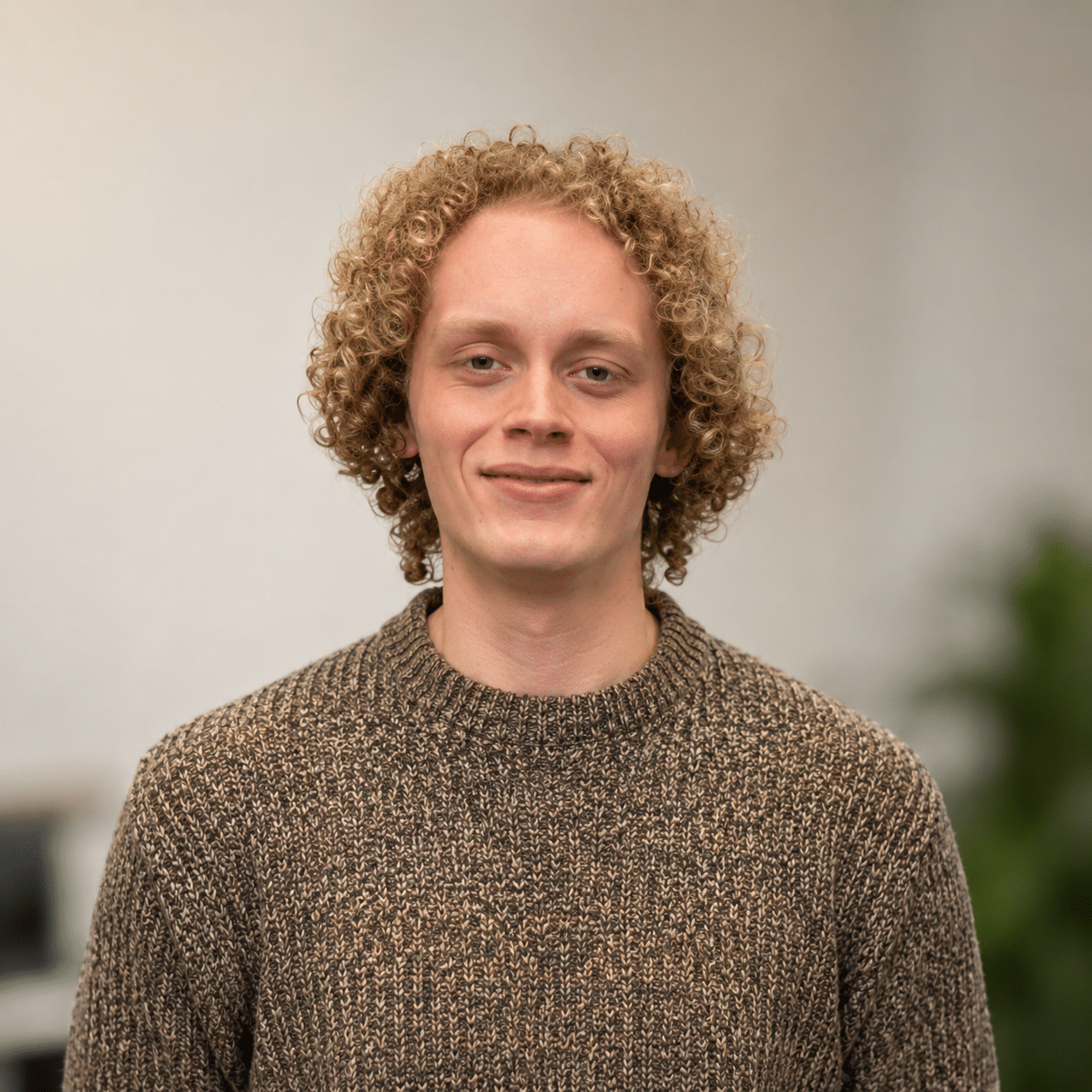
Niklas Vaara is a doctoral researcher at the Center for Machine Vision and Signal Analysis at the University of Oulu. His PhD work focuses on ray tracing methods for radio propagation modelling.
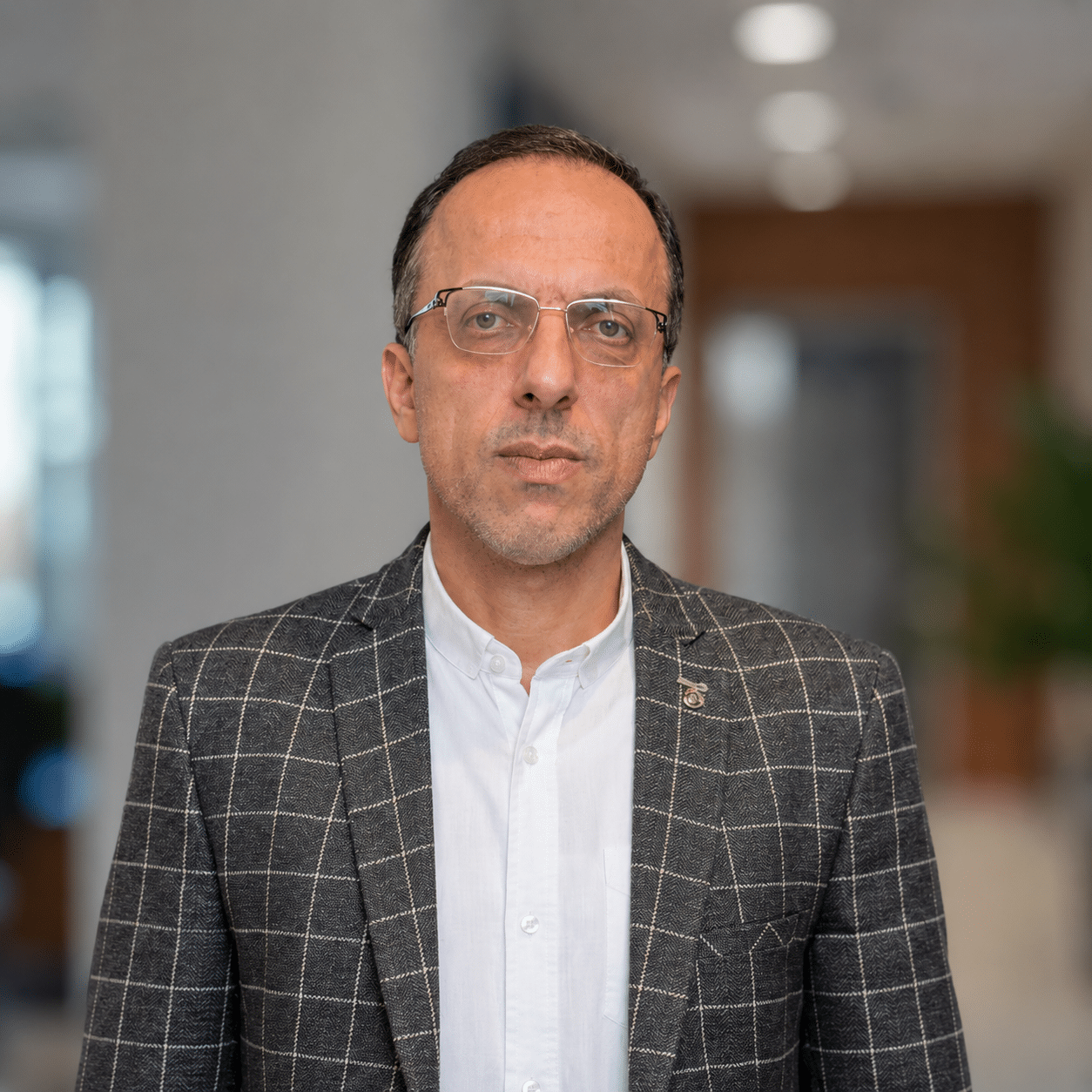
Mehdi Monemi is a senior researcher at the Centre for Wireless Communications (CWC) at the University of Oulu. His current work focuses on FR3 channel characterisation, reliability analysis of wireless networks, and 6G system design.
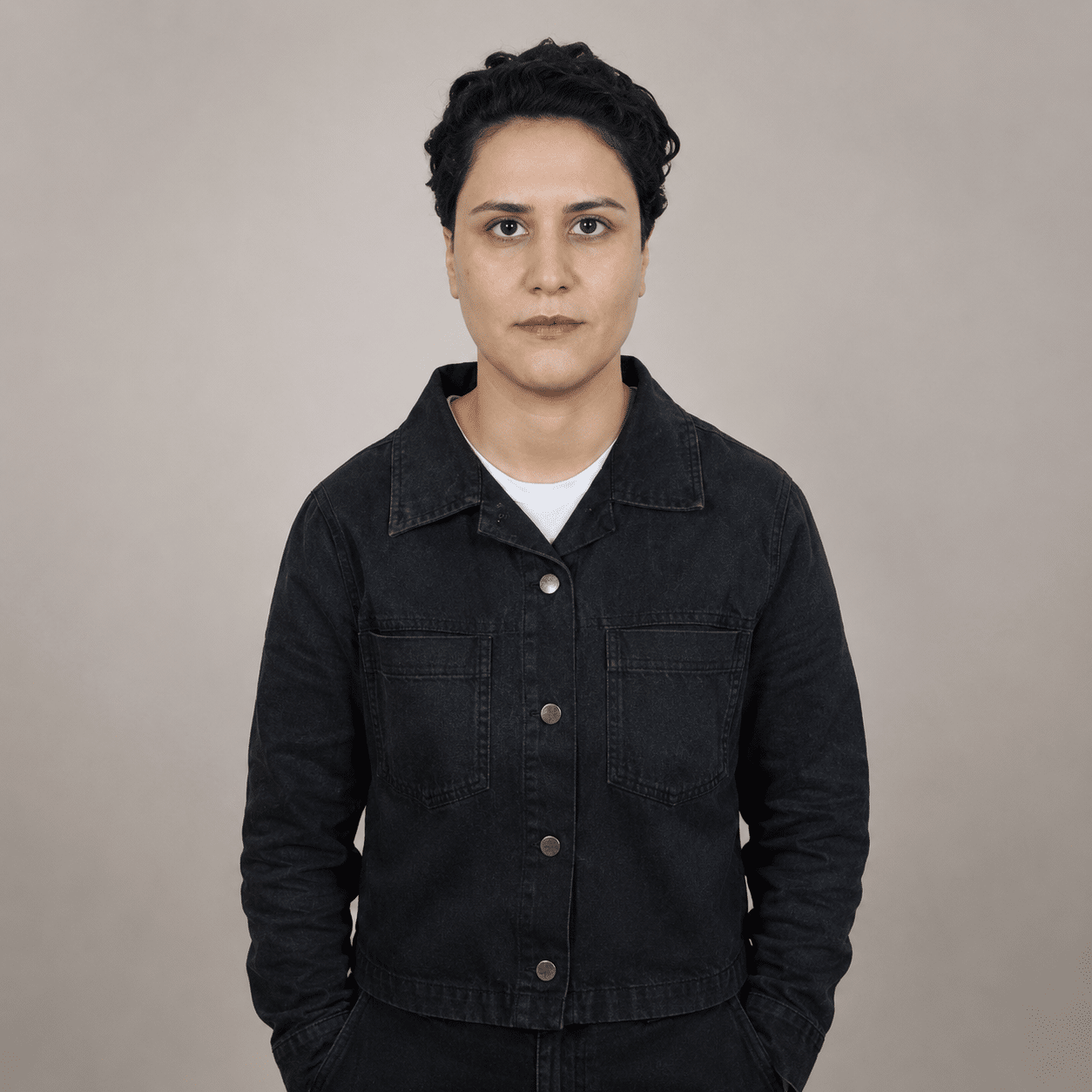
Elaheh Ataeebojd is a postdoctoral researcher at the Centre for Wireless Communications (CWC) at the University of Oulu. Her research focuses on resource allocation in wireless networks, integrated sensing and communications, stochastic geometry, optimisation, and deep learning.
Where to listen on Thursday 4 June
Niklas Vaara presents in session PHY-4 at 11:00–12:30 in room M3. Mehdi Monemi presents in session PHY-6 at 16:30–18:00 in room M3. Elaheh Ataeebojd presents in session PHY-5 at 16:30–18:00 in room M4.
The two afternoon sessions run in parallel, so attendees with an interest in both will need to choose between Monemi’s FR3 study and Ataeebojd’s metasurface design. If you are at the conference, come along, ask questions, and meet our researchers in person.
Papers will appear on IEEE Xplore in the coming months. EuCNC Proceedings are available to conference attendees on site.